The Great Gatsby
VIEW ALL ALBUMS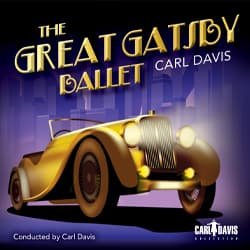
Sleeve Notes
In 1924 there occurred an extraordinary coincidence: George Gershwin composed his ‘Rhapsody in Blue’ and F. Scott Fitzgerald wrote his third novel ‘The Great Gatsby’. Gershwin’s score was bright, tuneful and optimistic. Fitzgerald’s novel was brilliant, funny and sad. Both defined the 1920’s as what Fitzgerald dubbed “The Jazz Age”.
I knew and loved both book and music from a very early age. I had an opportunity to express this when in 2019 the Pittsburgh Ballet Theatre commissioned a new score for a ballet based on the novel. I wanted this ballet to sound like an expensive Broadway musical of the period: a small group of strings but plenty of saxes, pinging brass and holding it together that jazz beat and the throb of the Blues. But I also had a story to tell and characters to delineate.
The novel darts about in time, only gradually revealing Gatsby’s story. The very first question I put to the choreographer, Jorden Morris, was whether we were going to preserve this procedure or were we going for a rationalisation of the story order. Jorden preferred to work in chronological order and that’s what we did. However, in choosing selections for concerts and CD, I chose to mix it up and look for a musical logic.
I also wanted to pay tribute to the popular dances of the day: sentimental waltzes, the Argentine tango and Paso Doble, Foxtrots and above all, the Charleston. But central to the book is the classic love story of Daisy Fay and Jay Gatsby. What starts as a wartime romance in 1917 ends tragically with their reunion five years later.
Finally, as Fitzgerald coined the phrase “The Jazz Age”, let’s have a jazz band play the score. The Paul Whiteman Band premiered the ‘Rhapsody in Blue’ in 1924 with George Gerschwin at the piano. The orchestration of my Gatsby ballet evolved from that band’s line-up.